- Series
- | Authors
- | Book Release Calendar
- | Search |
- Genres
- | Newsletter
- Welcome to FictionDB, Guest
- | My Account
- | Help

Enderverse (chronologically) — by Orson Scott Card
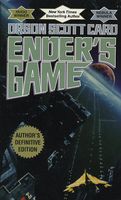

-
# of Titles:
10 main books + 1 short story
-
First Book:
Ender's Game (January 1985)
-
Latest Book:
Shadows in Flight (Book 10) (January 2012)
-
Genres:
Space Opera
-
Series Rating:
-
Reading Order:
🔴 Must Read in Order · Start with Book 1: Ender's Game
- Connect:
- Share:
Join the FictionDB email list to get access to the latest news and exclusive content.
The Enderverse (chronologically) Books in Order (12 Books)
| Order | Book | Date | Rating | |
|---|---|---|---|---|
| 1 | Ender's Game | Jan-1985 | 4.5 | |
| 1.5 | A War of Gifts | Nov-2007 | 5 | |
| 2 | Ender's Shadow | Oct-1999 | 5 | |
| 3 | Ender in Exile | Nov-2008 | 5 | |
| 4 | Shadow of the Hegemon | Dec-2001 | 5 | |
| 5 | Shadow Puppets | Sep-2002 | 5 | |
| 6 | Shadow of the Giant | Mar-2005 | 5 | |
| 7 | Speaker for the Dead | Feb-1986 | 5 | |
| 8 | Xenocide | Jul-1991 | 5 | |
|
| ||||
| 9 | Children of the Mind | Jul-1996 | 5 | |
| 10 | Shadows in Flight | Jan-2012 | 5 | |
| First Meetings in the Enderverse | Aug-2003 | 5 | |
|
Series Premise
The core premise spans centuries of human history, beginning with the discovery of an aggressive alien species (the Formics, or "buggers") whose first invasion nearly destroys Earth. In response, humanity unites under a global government and establishes Battle School to train gifted children as commanders in a desperate war effort. The central figure, a brilliant but emotionally burdened child, becomes the linchpin of victory in a conflict that reshapes civilization. Subsequent stories follow the aftermath: the political struggles for control of Earth, the search for new homes among the stars, encounters with alien species whose consciousness and morality challenge human assumptions, and the evolution of artificial intelligences and hive minds. Themes of xenocide, redemption, interspecies communication, and the moral cost of survival drive the narrative, with later arcs delving into philosophical questions about godhood, free will, and the interconnectedness of all sentient life.
The Enderverse (chronologically) Series Reading Order
🔴 Must Read in Order · Start with Book 1: Ender's Game
Read in order—each book builds directly on the previous one.
The series is best read in chronological order for the fullest understanding of the overarching timeline and character arcs. This sequence starts with prequel events of the First Formic War (humanity's initial encounters with the aliens and the rise of key figures), moves into the childhood and war-era training of the protagonists, covers the immediate post-war power struggles on Earth, then shifts to interstellar colonization, philosophical explorations on distant worlds, and the long-term legacy of earlier decisions. While the original core quartet can be read independently (and many start there for its focused intensity), the full Enderverse benefits from chronological progression to appreciate how early events echo across generations and how parallel perspectives (especially from secondary geniuses) enrich the main saga. Publication order offers a different experience—building suspense through revelations—but chronological provides clearer historical continuity.
Explanation of reading order types
The Enderverse (chronologically) Series Characters
Andrew "Ender" Wiggin
The central genius: a brilliant, empathetic child commander whose strategic mastery wins the war but leaves him haunted by guilt and isolation. He grows into a wandering "Speaker for the Dead," seeking atonement and understanding across centuries.
- Bean (Julian Delphiki)
A hyper-intelligent, genetically enhanced street urchin turned Battle School prodigy: pragmatic, loyal, and ruthless when necessary. His parallel perspective in the war and post-war politics offers a contrasting viewpoint to Ender's empathy-driven path.
- Peter Wiggin and Valentine Wiggin
Ender's older siblings: Peter, a ruthless strategist who rises to global power as Hegemon; Valentine, a compassionate writer whose essays shape public opinion and later joins Ender in exile.
- The Hive Queen (Formic Queen)
The last surviving Formic queen: intelligent, collective-minded, and seeking redemption through Ender, becoming a recurring symbol of misunderstood alien consciousness.
- Supporting and recurring figures
Setting of the The Enderverse (chronologically) Series
The setting spans a future where humanity has achieved faster-than-light travel (via ansible for instantaneous communication and relativistic ships for physical journeys), colonized distant planets, and established a Hegemony or Starways Congress governing interstellar affairs. Early stories center on a militarized, overpopulated Earth with orbital Battle School and zero-gravity training facilities. Later arcs expand to lush alien worlds with unique ecologies (like the planet Lusitania with its symbiotic human-alien-pepper-pig ecosystem), remote colonies facing cultural clashes, and vast distances bridged by ansible networks that enable philosophical dialogues across light-years. The universe feels lived-in and scientifically grounded, with alien species portrayed as truly other—hive-minded, philotic (soul-linked), or technologically transcendent—creating a sense of wonder tempered by danger.
Tone & Themes of the The Enderverse (chronologically) Series
The tone evolves across the timeline: early entries are intense, psychological, and militaristic with a focus on strategy and emotional isolation, while later books become more contemplative, philosophical, and expansive, incorporating religious, ethical, and metaphysical debates. The overall tone balances thrilling tactical battles and high-stakes drama with introspective melancholy and moral complexity. Themes include the dehumanizing effects of war and manipulation of children, empathy as both strength and vulnerability, the ethics of genocide and preemptive strikes, leadership and its burdens, cultural misunderstanding versus true understanding, the nature of consciousness (human, alien, and AI), redemption through compassion, and the search for meaning in a vast, indifferent universe.
In the end, the Enderverse stands as a towering achievement in science fiction—intimate yet cosmic, heartbreaking yet hopeful. Orson Scott Card crafts a saga where a child's game becomes humanity's salvation and burden, where empathy clashes with survival instincts, and where understanding alien minds forces us to confront our own. These books linger long after the final page, challenging readers to question war, morality, and connection in an infinite universe. Whether you're drawn to tactical brilliance, philosophical depth, or the quiet tragedy of genius, the Enderverse offers a journey that reshapes how you see intelligence, compassion, and the fragile thread binding all sentient beings.
Books in this series fall into the following genres
Sub-Genres
Themes
Frequently Asked Questions (FAQ)
Top Series in Space Opera