- Series
- | Authors
- | Book Release Calendar
- | Search |
- Genres
- | Newsletter
- Welcome to FictionDB, Guest
- | My Account
- | Help

A Song of Ice and Fire — by George R.R. Martin

-
# of Titles:
5
-
First Book:
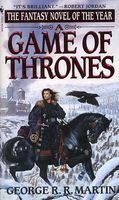
A Game of Thrones (August 1996)
-
Latest Book:
A Dance with Dragons (Book 5) (July 2011)
-
Genres:
Epic Fantasy
-
Series Rating:
-
Reading Order:
🔴 Must Read in Order · Start with Book 1: A Game of Thrones
- Connect:
- Share:
Join the FictionDB email list to get access to the latest news and exclusive content.
The Song of Ice and Fire Books in Order (5 Books)
| Order | Book | Date | Rating | |
|---|---|---|---|---|
| 1 | A Game of Thrones | Aug-1996 | 4.5 | |
| 2 | A Clash of Kings | Feb-1999 | 4.5 | |
| 3 | A Storm of Swords | Nov-2000 | 4.5 | |
| 4 | A Feast for Crows | Nov-2005 | 5 | |
| 5 | A Dance with Dragons | Jul-2011 | 5 | |
Series Premise
The core premise unfolds across the fictional continents of Westeros and Essos, where noble houses vie for control of the Iron Throne amid a devastating civil war known as the War of the Five Kings. Following the death of King Robert Baratheon, rival claimants and scheming lords plunge the realm into chaos, with shifting alliances, assassinations, and battles reshaping the political landscape. Parallel storylines follow the exiled Targaryen siblings—Daenerys in Essos, rebuilding power through dragons and conquest—and the growing supernatural menace of the Others (ancient ice beings) beyond the Wall in the frozen north, a threat most ignore amid human squabbles. The narratives intertwine as personal ambitions collide with larger forces, questioning whether anyone can hold the realm together before winter—and worse—arrives.
The Song of Ice and Fire Series Reading Order
🔴 Must Read in Order · Start with Book 1: A Game of Thrones
Read in order—each book builds directly on the previous one.
The series must be read in publication order, as it follows a continuous, multi-perspective narrative with escalating stakes, character development, and interconnected events that build across volumes. Each book advances the overarching plots—dynastic wars, Targaryen resurgence, and the northern threat—while resolving some threads but leaving larger mysteries unresolved. Reading sequentially is essential to track the full scope of shifting viewpoints, evolving motivations, and cumulative revelations; jumping ahead risks confusion over key events, alliances, and character arcs.
Explanation of reading order types
The Song of Ice and Fire Series Characters
Main characters form a sprawling ensemble with multiple viewpoint perspectives. Key figures include Eddard (Ned) Stark, honorable Lord of Winterfell whose integrity clashes with southern intrigue; his children—Robb (the young King in the North), Sansa (a naive lady learning harsh lessons), Arya (a fierce survivor), Bran (a boy discovering mystical gifts), and Jon Snow (a bastard raised at the Wall); Tyrion Lannister, the sharp-witted, dwarfed Lannister who navigates family treachery with intellect; Daenerys Targaryen, the exiled dragon queen rising from vulnerability to power; and others like Jaime Lannister (the Kingslayer seeking redemption), Cersei Lannister (ambitious queen), and Stannis Baratheon (rigid claimant). The cast evolves, with viewpoint characters shifting to reflect the world's breadth.
Setting of the The Song of Ice and Fire Series
Settings span a vast, medieval-inspired world: Westeros, a continent roughly the size of South America, divided into Seven Kingdoms with diverse regions—from the frozen Wall and haunted forests of the North to the lush Riverlands, stormy Iron Islands, arid Dorne deserts, and opulent King's Landing with its Red Keep and scheming court. Essos offers exotic contrast: Free Cities with merchant princes, Dothraki grasslands, slave cities of Slaver's Bay, and ancient ruins. The landscape feels lived-in and integral—harsh winters, seasonal unpredictability, and supernatural elements like dragons or wights shaping both politics and survival.
Tone & Themes of the The Song of Ice and Fire Series
The tone is gritty, realistic, and often bleak: high fantasy grounded in political intrigue, moral ambiguity, and consequences rather than heroic triumph. Violence, betrayal, and death strike without warning, yet moments of honor, wit, and human connection provide contrast. Themes probe the corrupting nature of power, the futility and cost of war, the clash between honor and pragmatism, gender roles in feudal societies, the weight of legacy and prophecy, prejudice against outsiders, and the tension between individual agency and destiny. Martin subverts classic tropes—good does not always win, heroes fall, and villains have redeeming qualities—creating a world where choices matter and no one is purely good or evil.
In the end, A Song of Ice and Fire endures as a monumental exploration of power's price and humanity's flaws—where thrones are won in blood, seasons turn mercilessly, and even the mightiest can fall. George R.R. Martin crafts an unflinching epic that rewards patience with unparalleled depth, reminding readers that in a world of ice and fire, survival demands cunning, courage, and compromise. For those who embrace its complexity and darkness, the series offers an immersive, unforgettable journey through ambition, loyalty, and the long night ahead.
Books in this series fall into the following genres
Sub-Genres
Themes
Frequently Asked Questions (FAQ)
Top Series in Epic Fantasy