- Series
- | Authors
- | Book Release Calendar
- | Search |
- Genres
- | Newsletter
- Welcome to FictionDB, Guest
- | My Account
- | Help

Dilbert — by Scott Adams
Dilbert Series in Order: 48 books
-
-
 Shave the Whales
Book - 4
"Dilbert by Scott Adams is the most photocopied, pinned-up, downloaded, faxed and e-mailed comic strip in the world. Dubbed ""the cartoon hero of the workplace"" by The San Francisco Examiner, Dilbert has been syndicated since 1989 and now appears in...
-
 It's Obvious You Won't Survive by Your Wits Alone
Book - 6
Adams scrapes his pen across the fears and absurdities of an age we entered when we weren't paying attention-the age of the bureaucratic vacuum. Dilbert is the Everyman in the down-sized, techno-centered workplace. He's the corporately innocent engin...
-
 Still Pumped From Using the Mouse
Book - 7
For the more than 50 million readers who regularly enjoy Dilbert in over 2,000 newspapers worldwide, Scott Adams's take on the working world is outrageously fresh, farcical, and far-reaching. In this collection, Dilbert and his egg-shaped, bespectacl...
-
-
 Casual Day Has Gone Too Far
Book - 9
"""Dilbert""--the world's fastest growing comic strip, read by 60 million fans in 32 countries--deals with the frustrations of everyday corporate life, as the title character struggles to maintain his identity and happiness in a world where attacks c...
-
-
 Seven Years of Highly Defective People
Book - 10
Includes comic strips from previous Dilbert books.In The Dilbert Future, Scott Adams turns futurist, offering a bold, compelling - and often hysterical - vision of future society. First, the good news: Human nature won't change much; many, if not mos...
-
 I'm Not Anti-Business, I'm Anti-Idiot
Book - 11
Scott Adams has accomplished a rare feat. In his wildly successful cartoon strip, Dilbert, he has transformed the daily drudgery of the workplace into a fresh, comic commentary on life. This volume of cartoons, which ran in newspapers from November 2...
-
 Journey to Cubeville
Book - 12
""Since Adams parted company with Pacific Bell in 1995, the business he has built out of mocking business has turned into the sort of success story that the average cartoon hero could only dream of."-The London Financial Times"G"...
-
-
 Dilbert Gives You the Business
Book - 14
The perennially diffident Dilbert is a favourite among contemporary North American cartoons, and no wonder. The calm centre of a chaotic workplace, Dilbert represents the heels and heroes in the pre-millennium office environment. This marvellous coll...
-
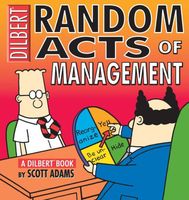 Random Acts of Management
Book - 15
In Random Acts of Management, cartoonist Scott Adams offers sardonic glimpses once again into the lunatic office life of Dilbert, Dogbert, Wally, and others, as they work in an all-too-believably ludicrous setting filled with incompetent managemen...
-
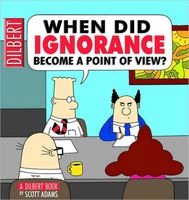 When Did Ignorance Become a Point of View
Book - 16
Scott Adams still has the corporate world guffawing about the adventures of nerdy Dilbert and his power-hungry companion, Dogbert, plus Ratbert and the pointy-haired boss, as they make their way through the travails of modern work life. Only a cartoo...
-
 Excuse Me While I Wag
Book - 17
Cubicle-dwelling business people the world over have been knowingly nodding, faithfully push-pinning their favorite strips to their cube walls, and--most of all--belly laughing out loud ever since Dilbert first arrived on the scene. In this collec...
-
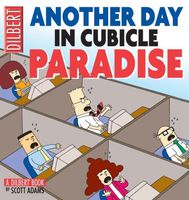 Another Day in Cubicle Paradise
Book - 19
White-collar hell has never seemed funnier than in this comic strip collection in the series that makes“the dronelike world of Kafka seem congenial” (The New York Times).When Dilbert first appeared in newspapers across the count...
-
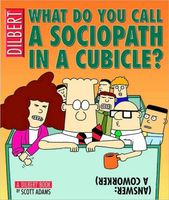 What Do You Call A Sociopath In A Cubicle? Answer: A Coworker
Book - 20
"Once every decade, America is gifted with an angst-ridden anti-hero, a Nietzschean nebbish, an us-against-the-universe everyperson around whom our insecurities collect like iron shavings to a magnet. Charlie Chaplin. Dagwood Bumstead. Charlie Brown....
-
-
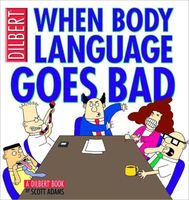 When Body Language Goes Bad
Book - 21
"Dilbert is easily one of the most clever and consistently funny comics in current circulation. Like all great comic strips, it provides a much-needed daily dose of comedy and, most importantly, keeps its finger firmly planted on the pulse of truth w...
-
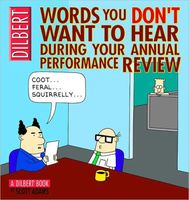 Words You Don't Want to Hear During Your Annual Performance Review
Book - 22
"Confined to their cubicles in a company run by idiot bosses, Dilbert and his white-collar colleagues make the dronelike world of Kafka seem congenial."Parasitic consultants, weaselly stockbrokers, masochistic coworkers and the ever-present, evil-plo...
-
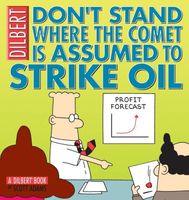 Don't Stand Where The Comet Is Assumed To Strike Oil
Book - 23
"Confined to their cubicles in a company run by idiot bosses, Dilbert and his white-collar colleagues make the dronelike world of Kafka seem congenial." -- The New York Times Why is Dilbert such a phenomenon? People see their own dreary, monotonous...
-
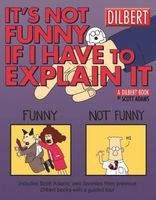 It's Not Funny If I Have to Explain It
Book - 24
Office workers, cubicle squatters, and corporate drones everywhere read Dilbert in their morning papers and see their own bosses and coworkers in the frames of the strip, enacting on newsprint the weird rituals and bizarre activities that are conduct...
-
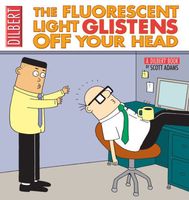 The Fluorescent Light Glistens Off Your Head
Book - 25
He captures our workplace frustrations with dead-on accuracy. He knows all about the technophobic vice president, the fascist information systems supervisor, and even the big, stubborn, dumb guy. How does he do it? How does he know? It's downright sp...
-
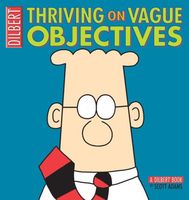 Thriving on Vague Objectives
Book - 26
"I think that idiot bosses are timeless, and as long as there are annoying people in the world, I won't run out of material." -- Scott Adams Dilbert and the gang are back for this 26th collection, Thriving on Vague Objectives. Adams has his finger ...
-
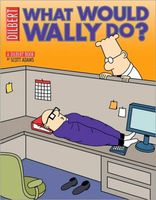 What Would Wally Do?
Book - 27
What would the world of work be like without Dilbert? Downright insufferable!When it became syndicated in 1989, Dilbert struck a nerve with workers everywhere. Through its frames they saw life on the job as they knew it, with all the absurdity, crazi...
-
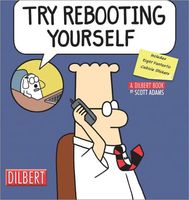 Try Rebooting Yourself
Book - 28
"It''s an embarrassment of riches. I feel like an undertaker who just heard about a bus accident. It''s tragic, but good for business.""Maybe, just maybe, the reason Scott Adams is able to so completely and utterly skewer the absurdities of the moder...
-
 Positive Attitude
Book - 29
Today I had a choice of doing something important that no one would ever realize . . . or doing something that would look like an accomplishment. So I attended meetings until I could no longer appreciate the difference." -Dilbert* Dilbert appears in ...
-
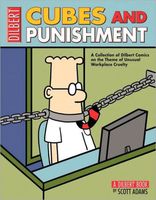 Cubes and Punishment
Book - 30
My cube is sucking the life force out of me." --DilbertIn Cubes and Punishment: A Dilbert Book, Dilbert sardonically skewers the Dostoevskian sense of despair and anxiety that corporate life breeds. And nowhere is this sense more alive than in the de...
-
-
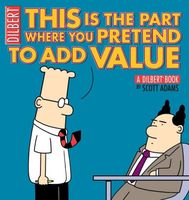 This Is the Part Where You Pretend to Add Value
Book - 31
"Ninety percent of ethics is picking the right ethicist."" -DilbertMore This Is the Part Where You Pretend to Add ValueScott Adams offers up his this Dilbert collection ex...
-
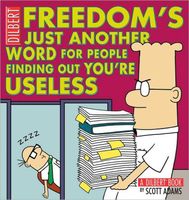 Freedom's Just Another Word for People Finding Out You're Useless
Book - 32
No office can function without a little humor and craziness. Adams turns mundane office issues into excruciatingly funny office moments. In Freedom''s Just Another Word for People Finding Out You''re Useless, fans get a hilarious collection of g...
-
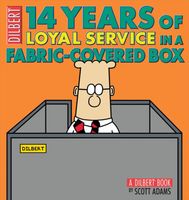 14 Years of Loyal Service in a Fabric-Covered Box
Book - 33
Anyone who works in a fabric-covered box can relate to Dilbert. Since 1989, Dilbert has been the touchstone of office humor for people all over the world. As long as there are corrupt businesses, inept bosses and downright loathsome co-workers, there...
-
 Problem Identified: And You're Probably Not Part of the Solution
Book - 34
In Problem Identified: And You're Probably Not Part of the Solution, cartoonist Scott Adams affectionately ridicules inept office colleagues--those co-workers behind the pointless projects, interminable meetings, and ill-conceived downsizings--in ...
-
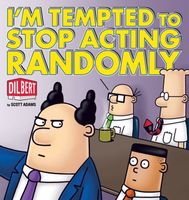 I'm Tempted to Stop Acting Randomly
Book - 35
Following his 20th anniversary hit, Dilbert 2.0, Scott Adams returns with another Dilbert collection of funny page favorites inside I'm Tempted to Stop Acting Randomly.
Inside this collection, Dilbert and his team "flail around in futility"...
-
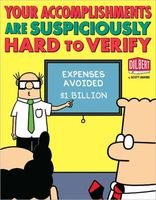 Your Accomplishments Are Suspiciously Hard to Verify
Book - 36
Inside Your Accomplishments Are Suspiciously Hard to Verify, Adams tackles the subjects of Elbonian slave labor, faulty product recalls, less-than-anonymous employee surveys, and more. If you've ever looked among your co-workers and t...
-
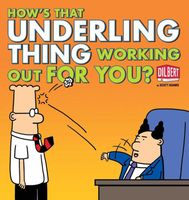 How's That Underling Thing Working Out for You?
Book - 37
AMP''s Dilbert calendars are the best-selling calendars in the world, with sales over 400,000 every year. Pointless projects, endless meetings, and random downsizing make up the Dilbert world.For more than 20 years, Scott Adams's Dilbert has chro...
-
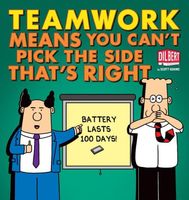 Teamwork Means You Can't Pick the Side That's Right
Book - 38
AMP’s Dilbert calendars are the best-selling calendars in the world, with sales over 400,000 every year. Pointless projects, endless meetings, and random downsizing make up the Dilbert world.He''s the icon of millions of corporate ...
-
 I Can't Remember If We're Cheap or Smart
Book - 39
As the icon of oppressed, overworked, and abused cubicle dwellers everywhere, Dilbert gives the downtrodden something to laugh about.Whether avoiding pointless meetings with the clueless pointy-haired boss or angsting over insanely impossible sa...
-
 Your New Job Title Is Accomplice
Book - 40
Dubbed "the cartoon hero of the workplace" by the San Francisco Examiner, Dilbert is the cubicle-bound star of the most photocopied, pinned-up, downloaded, faxed, and e-mailed comic strip in the world.As fresh a look at the inanity of offic...
-
-
 I Sense a Coldness to Your Mentoring
Book - 41
Dilbert is the most photocopied, pinned-up, downloaded, faxed, and e-mailed comic strip in the world. Dubbed "the cartoon hero of the workplace" by the San Francisco Examiner, Dilbert has been syndicated since 1989 and now appears in 2,000 newspapers...
-
 Go Add Value Someplace Else
Book - 42
He''s the icon of millions of corporate workers, the most popular cubicle dweller on this planet. He spends his days in endless meetings with incompetent supervisors, performing perfunctory tasks mixed with the occasional team-building, brainst...
-
 Optimism Sounds Exhausting
Book - 43
Does Scott Adams really have a hidden camera in your cubicle?Dilbert, the cubicle-dwelling drone, is at his satirical best with this new collection of cartoons. Dilbert has managed to keep up with technology like iPads and Twitter over the years, as ...
-
 I'm No Scientist, But I Think Feng Shui Is Part of the Answer
Book - 44
Dilbert is thecartoon world's Office Space, a cubicle eye view of the real workplace!What do the arts of yoga, feng shui, and Irish dance have in common? They can’t save you from a gnawing dissatisfaction with your job. Luckily, our ...
-
 Dilbert Gets Re-accommodated
Book - 45
Dilbert is the cartoon world's Office Space: a cubicle-eye-view of the real workplace!When confronted by unjust systems of corporate domination, whenever and wherever they may be, Dilbert boldly . . . gets “re-accommodated.”The l...
-
 Cubicles That Make You Envy the Dead
Book - 46
"The cartoon hero of the workplace"--San Francisco ExaminerDilbert is the cubicle-bound star of the most photocopied, pinned-up, downloaded, faxed, and e-mailed comic strip in the world.As fresh a look at the inanity of office life as it brought to t...
-
 Eagerly Awaiting Your Irrational Response
Book - 48
Scott Adams's cartoon hero of the workplace is back in another treasury featuring an entire year's worth of new Dilbert comic strips.In the age of big tech companies, open office plans, and corporate consolidation, Dilbert has never been more...
-
 The Office Is a Beautiful Place When Everyone Else Works from Home
Book - 49
Everyone's favorite comic strip office worker returns in this dry, sarcastic, and utterly hilarious new Dilbert collection. No one is more accomplished at making the drudgery of office work into comedy than Dilbert creator Scott Adams, whose land...
-
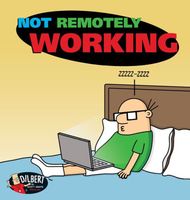 Not Remotely Working
Book - 50
This relatable and hilarious selection of Dilbert comics from late 2020 through 2021 puts a spotlight on the comedic aspects of professional life during the pandemic. The COVID-19 pandemic has forever changed the way we go to work, but the satirical ...


Series Premise
The Dilbert books take the core premise of the comic strip — a surreal, deadpan portrayal of corporate life as seen through the eyes of an intelligent but powerless engineer — and expand it into longer-form satire. The central idea is simple and consistent across both strip and books: - Corporate life is inherently absurd, inefficient, and often cruel. - Most management decisions are made by people who do not understand the work. - Employees are trapped in a system that rewards politics, jargon, and conformity over competence and results. - The average worker is far smarter than the system allows them to be, yet remains powerless to change it. Each book collects favorite strips on a theme (management fads, pointless meetings, performance reviews, cubicle life, downsizing, leadership nonsense) and surrounds them with Adams’s own essays, anecdotes from readers, fake “case studies,†and satirical “management secrets.†The books are part humor collection, part workplace manifesto, part self-help parody. The recurring message — delivered with deadpan sarcasm — is that the modern corporation is a theater of the absurd, and the only sane response is to laugh at it.
Dilbert Series Characters
Dilbert: The everyman protagonist — an intelligent, cynical engineer with round glasses, a striped tie, and zero respect for authority. He is the voice of the reader: smart enough to see through the nonsense, powerless to change it. He is surrounded by idiots and survives by sarcasm and passive resistance.
- The Pointy-Haired Boss (PHB): Dilbert’s manager — incompetent, vain, cruel, and utterly convinced of his own brilliance. He is the embodiment of middle management: obsessed with buzzwords, metrics, and looking busy while accomplishing nothing.
- Wally: Dilbert’s coworker — the ultimate slacker genius. He has mastered the art of doing nothing while appearing to do everything. Lazy, brilliant, and shameless.
- Alice: The only woman in the engineering group — brilliant, foul-tempered, and terrifying. She solves problems with violence when logic fails.
- Dogbert: Dilbert’s pet dog — a ruthless, amoral sociopath who constantly schemes for world domination. He is Dilbert’s advisor, manipulator, and occasional conscience (in the most cynical way possible).
- Catbert: The evil director of human resources — a cat who delights in making employees miserable.
- The Boss’s Secretary (Carol) and various other recurring bit players (the Elbonians, PHB’s mother, etc.).
Setting of the Dilbert Series
The setting is the generic, timeless North American corporate office of the late 20th and early 21st centuries. There is no specific company name, city, or year; the office is an archetype — cubicles, fluorescent lights, pointless meetings, motivational posters, endless email chains, re-orgs, downsizing announcements, and the ever-present specter of middle management. The company manufactures nothing identifiable; it simply exists to generate bureaucracy, PowerPoint decks, and performance reviews.
The office is deliberately placeless and dateless — no smartphones in the early books, no social media, no remote work — yet it feels eternal. It could be 1995 or 2015; the absurdities remain the same. Occasional strips venture into the outside world (home life, dating, shopping), but the heart of the series is the cubicle farm, the conference room, and the manager’s glass-walled office.
Tone & Themes of the Dilbert Series
The tone is sardonic, cynical, deadpan, and relentlessly funny in a bleak way. Adams writes with the detached amusement of someone who has seen every management fad and corporate lunacy up close and found them all ridiculous. There is almost no sentimentality or hope for reform; the humor is rooted in the premise that nothing will ever get better, so you might as well mock it. The writing is conversational, self-deprecating, and frequently profane (especially in the books aimed at adults). The comedy is observational and cruelly accurate — it hurts because it’s true. Yet the tone is never bitter or despairing; it is liberating. By naming the absurdities of office life so precisely, Adams gives readers permission to laugh instead of scream. The books feel like a survival manual for the cubicle-dwelling soul: laugh, endure, and never take any of it seriously.
Scott Adams’s Dilbert books are a savage, hilarious, and strangely comforting dissection of corporate life — a collection of comic strips and essays that named the absurdities of the modern office so precisely that they became part of the language. Through Dilbert, Wally, Alice, the Pointy-Haired Boss, Dogbert, and Catbert, Adams created a timeless cast of archetypes that still feel painfully accurate decades later. The books are not hopeful; they do not promise reform or revolution. They simply say: yes, it really is this stupid, and no, it’s never going to get better — so laugh, survive, and keep your résumé updated. Yet in that laughter there is liberation. By mocking the system so relentlessly, Adams gave millions of cubicle dwellers a way to endure it without losing their minds. The Dilbert books remain a cultural artifact and a survival manual: proof that even in the most soul-crushing environment, humor is a form of resistance, and naming the absurdity is the first step toward surviving it.
Books in this series fall into the following genres
Frequently Asked Questions (FAQ)
Top Series in Graphic Novel