- Series
- | Authors
- | Book Release Calendar
- | Search |
- Genres
- | Newsletter
- Welcome to FictionDB, Guest
- | My Account
- | Help

The Crayons — by Drew Daywalt
The Crayons Series in Order: 6 books
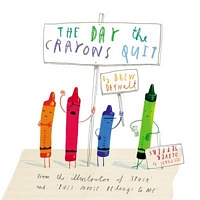
The Day the Crayons Quit
Drew Daywalt
Book - 1
Jul-2013

The Day the Crayons Came Home
Drew Daywalt
Book - 2
Aug-2015
The Crayons' Book of Colors
Drew Daywalt
Book - 2.5
Oct-2016
The Crayons' Book of Numbers
Drew Daywalt
Book - 2.6
Oct-2016

The Crayons' Christmas
Drew Daywalt
Book - 3
Oct-2019
Love from the Crayons
Drew Daywalt
Book - 4
Dec-2019
Series Premise
The core premise revolves around a young boy named Duncan and his box of crayons, who possess distinct personalities, feelings, and complaints about how they are used (or misused) in his artwork. In the foundational tale, the crayons stage a colorful rebellion, writing letters of resignation to Duncan because they feel overworked, underappreciated, or stereotyped in his drawings. Red is exhausted from coloring so many fire engines and hearts; Blue needs a break from all that water and sky; Beige is tired of always playing second fiddle to Brown; and Pink wants to color more than just princesses. The stories explore what happens when the crayons go on strike or go missing, forcing Duncan to think creatively and empathetically to bring harmony back to the crayon box. Later books expand this universe with the crayons embarking on new adventures, exploring concepts like colors, numbers, and feelings, or simply sharing more humorous letters and escapades that highlight their individual quirks and group dynamics. At its heart, the series turns everyday art supplies into relatable characters who mirror human emotions, teaching young readers about fairness, creativity, and problem-solving in the most entertaining way possible.
The Crayons Series Reading Order
🟡 Mostly Standalone · Start Anywhere
Mostly standalone stories with recurring characters in a shared setting.
The books can largely be enjoyed in any order, as most function as self-contained, episodic adventures or concept explorations rather than a strict linear narrative. The original story and its direct follow-up provide the strongest emotional foundation by establishing the crayons’ personalities and their relationship with Duncan, but the concept books (focusing on colors, numbers, or emotions) and additional tales stand completely on their own. There are no major spoilers or required continuity between volumes; children and adults alike can dip into any title based on interest—whether it’s a story about rebellion or a playful counting book—and still fully appreciate the humor and heart. This flexibility makes the series ideal for repeated readings, classroom units on creativity, or matching a book to a child’s current mood or learning focus.
Explanation of reading order types
The Crayons Series Characters
The main characters are the vibrant, opinionated crayons themselves, each with a distinct voice and gripe that makes them instantly memorable. Red is overworked and dramatic, constantly coloring hearts and fire engines. Blue is exhausted from endless oceans and skies. Yellow and Orange feud over who is the true color of the sun. Beige (or “tanâ€) resents being overlooked in favor of Brown. Pink feels pigeonholed into “girl†things. Black wants more than just outlines. White feels invisible without outlines. Green is surprisingly content but often caught in the middle. Purple dreams of being used for more regal purposes. Duncan, the young boy, serves as the quiet, thoughtful human anchor—he never speaks directly but responds through his creative solutions, showing growth in empathy and imagination.
Setting of the The Crayons Series
The setting is delightfully simple yet endlessly imaginative: primarily Duncan’s everyday world, seen through the crayon box and his drawings. The action unfolds in a child’s bedroom or classroom, with the crayon box serving as the central “stageâ€â€”a humble cardboard home that becomes a forum for dramatic declarations. Illustrations expand this into fantastical scenes within Duncan’s artwork: fire trucks, oceans, sunsets, dinosaurs, and whimsical creations that reflect each crayon’s personality. Sensory details pop through Jeffers’s style—the waxy texture implied in the drawings, the crumpled paper of the letters, the bright, varied hues that seem to leap off the page, and the chaotic yet charming mess of a child’s coloring session. The world feels intimate and safe, a place where even inanimate objects have voices and feelings, turning ordinary moments of art time into epic, laugh-filled dramas.
Tone & Themes of the The Crayons Series
Daywalt’s tone is irreverent, hilarious, and warmly empathetic, delivered through the crayons’ sassy, handwritten complaint letters that feel like secret notes from disgruntled coworkers or friends. The humor is clever and layered—slapstick for little ones, witty wordplay for older readers and parents—while Jeffers’s illustrations add visual comedy through exaggerated expressions and chaotic drawings. There is mild conflict (hurt feelings, arguments between colors), but everything resolves with kindness and creativity, never descending into meanness. Themes emphasize empathy and perspective-taking (walking in someone else’s crayons), the importance of creativity without rigid rules, fairness and inclusion, emotional expression, problem-solving through listening and compromise, and the joy of using one’s imagination freely. The stories gently teach that every color—and every person—has value, that stereotypes can limit fun, and that small acts of consideration can restore harmony. They celebrate diversity within a group and the idea that art (and life) is richer when everyone gets to shine in their own way.
In the end, the Crayons series by Drew Daywalt is a burst of colorful genius that turns a simple crayon box into a stage for big emotions, big laughs, and even bigger lessons about kindness and creativity. With Daywalt’s clever writing and Jeffers’s playful art, these books remind us that even the smallest voices (or sticks of wax) deserve to be heard, that creativity thrives when we break the rules a little, and that true harmony comes from understanding one another’s perspectives. Whether the crayons are quitting in protest, coming home from adventures, or teaching colors and numbers, the series wraps young readers in warmth, wit, and wonder—proving that a box of crayons holds infinite stories, endless possibilities, and the power to make the world a brighter, fairer place. Grab a box, open these pages, and let the crayons color your imagination with their hilarious, heartfelt rebellion. In a world that sometimes feels black and white, Daywalt’s crayons show us just how beautiful—and fun—it is to live in full color.
Books in this series fall into the following genres
Genres
Themes